


“In the Bag”
Nowhere does your equipment dollar buy such a difference as in sleeping bags. You trade dollars for weight. On the high side, you can go incredibly light and small…or pay less and get a heavier bag.
Set a budget range for yourself before you begin looking; that will simplify your decision. For example, if I decide I want the best I can get for under $300; that allows me to rule out the mega-light options on the top and the Girl Scout options on the bottom.
A question you might ask as you choose a price range: will I use this bag again after TPU, and for what purposes? In terms of weather, TPU is light duty; you won’t get rained on and it rarely gets colder than 45° at night. If this bag is only going to see action at TPU, you can get by just fine with a cheaper bag. But if you’re also planning a thru-hike on the Pacific Crest next year or you’re an incurable camper, you’ll be willing to pay more to have a bag that will work in colder climates than Big Bend.
The temperature rating for bags qualifying for TPU is 45° F minimum (7° C). Almost all three-season and summer bags meet that standard. If you don’t see any later cold-season camping in your future, a summer bag might be all you need.
The historical average temperatures for Big Bend Ranch in October range from 45°F at night to 75°F high during the day. (www.myweather2.com). In reality, the high temp each day is usually in the 85°F - 90°F range given the high degree of southern exposure and the night temp is a desert climate so it feels cooler to some. With that all said - it’ll be personal preference but remember you’ll be sleeping inside our teepee tents, which does conserve some warmth at night.
Now… down or synthetic materials? Down is ultralight, compressible (small volume in your pack) and it holds warmth well; on the down side (so to speak)… it clumps up when it gets wet, it’s an animal product and it’s more costly than synthetic.
Synthetic is easier to clean, hypoallergenic, and less expensive, but it is also heavier, bulkier and provides less warmth per ounce. You can read more about the comparisons here.
Now down to the nitty-gritty. After you’ve made your decision about future use of the bag, temperature requirements, materials, and cost range, you can dive into some particular bags.

There are some good choices from Europe, where expedition stage races like Marathon des Sables are more common than in the US and manufacturers design specifically for multi-day stage races. WAA, a French company, offers an innovative system, the Ultra Sleeping Jacket, a two-in-one product, down-filled and weighing in at a total of 24 oz. It’s a down jacket that zips onto a half bag. By day, the bag fits into the pocket of the jacket. Fully compressed, the whole rig measures 9”x 8”x 3”. At $400, it leans toward the high end, but the jacket will likely get good use by any runner, even if the lower bag sees limited use.

Peter Hutchinson Designs (PHD), a British outfit, allows you to custom-build your own bag. This is probably overkill for TPU, but if you have other expeditions in your future, you might take a look. After you choose the base bag rated for temperature, you can add options like a foot zip, mummy hood, fill pattern, and custom length. The cheapest no-frills bag is £276, or about $350. If you are unusually tall, their custom sizes might be worth the price tag.

On the American side, Western Mountaineering’s Everlite down-filled bag packs down to a mere 5”x10”, weighs less than a pound and is rated to 45°. List price is $320, but I saw it on sale for $285. Nice. (But if you like “pretty” in a bag, this one only comes in brown.) The Everlite was the bag of choice for 2016 finishers Eric and Paul Chan.

Sea-to-Summit makes a great three-season bag, the Spark II, that packs down to the size of a grapefruit. It’s rated to 35° and weighs a pound. It’ll run you around $375.

REI carries some great bags, and you get the extra advantage of in-store advising and getting to touch the product before buying. The REI Helio Down bag sits at the lower end of cost at $140, but it meets the 45° temperature rating, stuffs down to about 9”x7” and weighs 26 oz.
The Marmot Atom (sold by REI) is a down three-season bag rated to 35°, weighing in at 21 oz and costing $289. The Atom’s synthetic cousin would be the Trestles bag, which costs only $100 but weighs nearly 3 pounds.

The North Face Aleutian 40 is a synthetic bag with a light price tag of $100 and a lighter weight at 2 lbs 3 oz. It stuffs down to 9”x16”.
More and more fastpackers are looking at sleeping quilts now, rather than bags. A sleeping quilt is lighter, packs down to a smaller volume, allows more freedom of movement for toss-and-turners and is more versatile than a bag. You can cover your torso while leaving legs free, or vice versa, with no zipper issues, making it more agreeable on warmer nights. Most are available with a drawstring at the bottom to close up for foot warmth, but it’s not draft-proof in truly cold weather. The sleep quilt is an approved option for a race like TPU (so long as it has the drawstring or zip function).
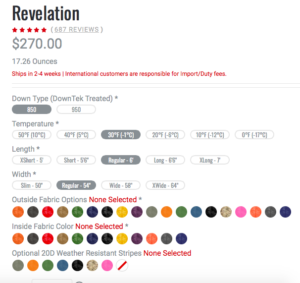
Enlightened Equipment has down and synthetic versions, with about $100 price difference. I like the freedom to choose your own interior and exterior colors, length, width, and temperature rating. The custom choices require 2-4 weeks lead time.

You’ll probably want a sleep mat, too. You may not need it for warmth insulation, but it’ll make the rocky ground more sleepable. TPU veteran Cheryl Tulkoff uses a Therm A Rest Neo Air Xtherm which will run you about $150. It weighs just less than a pound and is constructed with over 100 cells, which works well on the rocky terrain that is a feature of Big Bend. The Therm A Rest XLite at $130 weighs a half-pound less, but there may a reason for the link to the video “How to Fix a Leaky Sleeping Pad” on the Amazon page. TPU veteran Eric Chan found that the valve on his XLite leaked over time.
The Klymit Static V is a full-size mat that weighs only 18 oz, costs $55 and is constructed of rugged material that isn’t afraid of rough terrain. Klymit’s Inertia X-Frame takes out bulk and leaves padding only at pressure points (head, shoulders, hips). Pared down to a skeleton, it weighs only 6 oz., stuffs down to the size of a soda can and costs $60 on Amazon.
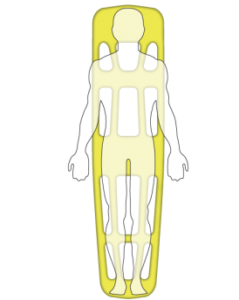
For 3 more ounces and about the same price, you can get the full-length Inertia X-Frame.
There are ever so many more choices; I’m only scratching the surface for simplicity’s sake. You get the idea: the more you’re willing to pay, the lighter you can go.
Check out your local mountain store, countless outdoor websites or your nearest REI retailer.
If the many choices have you bewildered, contact the Race Director, Chris Herrera. If he doesn’t have the answer, he can steer you to someone who does. Reach him at [email protected] or 432.294.5284.

