Big Bend is such a special place and we just can’t wait to get back out to the remote back country for the 5th Annual TPU2019 next November. We’ve already made some pretty special announcements with our $10k prize purse, up to 6 UTMB qualification points, as always our VIP race experience - limited to 75 participants. Now we’re giving you one more reason to make this your #YEAROFADVENTURE.
With Event Registration Protector™ from Allianz Global Assistnace, a participant who misses an event for a reason, such as a covered injury, illness, job loss, transportation delays, military/family/legal obligations, and more, can get 100 percent of their registration fees reimbursed — up to $10,000*. Plus, they also get our 24/7 service and assistance benefits, and all customer service and claims activity, without risk or management resources from event organizers.
What does it cover?
You may be eligible for reimbursement in the following situations:
Illness or Serious Injury - if the participant is prevented from participating in the event due to a covered illness or injury, or if a family member is hospitalized or requires care by the participant
Employer Termination - After being employed by the same employer for one continuous year, the participant is laid off
Traffic Accidents - if you are directly involved in a traffic accident and unable to get to the event
Mechanical Breakdown - if the participant’s car breaks down no more than 48 hours before the event
Airline Delay - if the participant’s plane or other Travel Carrier is delayed (includes bad weather) while going to the event
Home Issues - if the participant’s home is uninhabitable due to fire, flood, vandalism, burglary or natural disasters
Jury Duty - if the participant is required to serve on jury duty on the day of the event
Military Duty - if the participant is required to miss an event as a result of military orders
It’s time. Give yourself the gift of adventure by signing up for TPU2019 today. Click here for Course Info & Rules or head over to our Registration page to sign up.
*Please review declaration of coverage and certificate of insurance/policy for specifics about the policy that you purchase.
TPU is a unique event that breaks people from the highly stressful 9-5 urban lifestyle to experience nature and the power of a shared purpose - food, shelter, and camaraderie. It has always been a dream of mine to start a charity but it’s only until recently that the pieces have come together. My vision is to create an annual outdoor youth leadership experience in Big Bend to connect, educate and prepare young minds for the future. The aim would be to connect local youth in the Big Bend area with their urban counterparts in a non-judgmental, outdoor learning environment.
As the youngest child of a divorced family, I struggled to find peers throughout primary school, carried a low-self esteem and developed a poor body image. In subsequnt years, this translated into alcohol abuse and eventually social anxiety. While these and other struggles remain a part of me, I’m blessed to have the support of a BIG and loving family, friends, and perhaps most importantly, the faith to find solace in the great outdoors.
TPU has confirmed in me the concept that the outdoor world provides a living laboratory for adventure and personal discovery. It is with this in mind that I have set my goal for this event to give back to those around me by developing an outdoor youth leadership experience. After literally moving homes every 1-3 years since I was 5 years old, it’s with great enthusiasm that I announce Big Bend as my home. And it’s with even greater joy that I announce Big Bend as a place to reflect on life and connect with people for the greater good of humanity. Sometimes a simple existence is simply perfect. That is what TPU means to me and that is what TPU offers to those who participate and volunteer each year.
So this year it’s time to officially give back. Our goal is to raise a minimum of $5,000 through donations made on behalf of a TPU2018 participant or general donations made to this campaign by Aug 1st, 2018. With this message, I commit to give back 100% of these funds to launch a new annual outdoor youth leadership experience in Big Bend!
To support our youth leadership camp you can either 1) register for TPU and start collecting a minimum of $500 in donations through our Fundraising page or 2) simply make a general donation to this campaign by visiting our Fundraising page and clicking the ‘DONATE NOW’ link.
If you have any question or comments - or just want to chat about Big Bend - give me a call!
Sincerely,
Chris Herrera
Creator / Race Director
432.294.5284
hello[at}trans-pecosultra.com
A conversation with TPU veterans Cheryl Tulkoff and Thomas Mullins
The heaviest, bulkiest and most important item in your pack in a self-supported stage race like TPU is your food. You’ll be fully loaded on Day One, and you’ll whittle it down as the week goes on, but planning is essential. You don’t want to be overloaded when you start, and you also don’t want to be foraging on the native plant life by Day Five.
Several factors to consider:
Calories, or how much energy is in each food item
Its weight
Its protein content
Its ability to put a smile on your face (not to be underestimated)
Some TPU veterans describe their nutrition plan as a “controlled starve” because the calories needed to be extremely active for many hours per day over seven days is more than you really want to carry on your back.
The Math: Roughly, the average number of calories per ounce of popular trail foods is about 100. Let’s say you burn 80 calories a mile, on average, at a walk/run pace (more if you’re male and more if you run more than you walk). TPU courses are about 26 miles per day, which means you need about 2100 calories in addition to your basal metabolism burn for the day… so 3600-5000 calories per day. That works out to carrying 2-3 pounds of food, per day, or 14-21 pounds of food for the week. With water, sleeping bag, pack and food, you’d be looking at carrying 22-27 pounds starting out the week, which is a lot of weight riding on your back.
So let’s just say you may lose a few pounds over the course of TPU. Now what’s your best strategy?
TPU race regulations require you to begin the week with a minimum of 14,000 calories (2000 per day). 2015 TPU female winner Cheryl Tulkoff began her week with 8 pounds of food (14,275 calories), approximately the same weight as all her other gear put together. Cheryl is a 110-pound female so she was carrying the low end of the calorie scale.
2015 TPU overall winner Thomas Mullins estimates that 80% of his starting pack weight was nutrition and the pack was well over 20 pounds. He opted for the high side of calories based on his own running experiences. While his pack was heavier than most, he took comfort in knowing that it would become lighter with each passing day as he consumed the nutrition. And he won the race, so that’s a vote for going with your instincts and personal experience.
At the least, plan to get the most bang for your buck, the most calories for the weight. Check the nutrition labels on the food you propose to pack and compute its calories-per-ounce. You’ll no doubt include some foods that are lower calories-per-ounce just because they work for you, but you’ll want to maximize calories to the extent possible.
Here are some examples:
Calories per ounce of popular trail foods
CLIF Pizza Margherita Organic Trail Food
38
Vita Classic Nova Smoked Salmon
50
Dried Apricots
69
GU Roctane Vanilla Orange Energy Gel
91
Vega Protein & Greens Vanilla Shake (20 g protein)
104
Quaker Instant Apple Cinnamon Oatmeal
105
ProBar Meal Replacement Koka-Moka
123
Mountain House freeze-dried Beef Stroganoff
129
Jack Link’s Small Batch Bacon Jerky
130
CLIF Nut-Butter Filled Chocolate Peanut Butter bar
131
Cashews, raw
155
ProBar Sriracha Peanut Butter pouch
157
There is something to be said for having a “luxury” food in your back-pantry. After a long day on the trail, it can be a sweet reward that perks you up nicely. Thomas says his “luxury” food of smoked salmon was worth every ounce of extra weight. He consumed it at strategic points during the week, and it had many nutritional benefits as well as being a special treat.
One of Cheryl’s staple foods was the ProBar. Meal replacement ProBars score high on the calorie-per-ounce scale and are vegan, gluten-free and multi-flavored. A Koka-Moka or Superfruit Slam might very well satisfy the craving for a “luxury” food while delivering clean calories, fiber and protein.
ProBar and Justin’s both make nut butters in small-serving packs (1.15 oz) that are perfect for trail use, about the size of a GU pack. With a variety of flavors, these make good luxury foods, too: coconut almond caffeine or sriracha peanut butter, for example. Tulkoff recommends packing something with a little kick if you are accustomed to spicy food. Freeze-dried or processed foods can begin to seem excessively bland over the course of a week.
Tulkoff also highly advises a recovery shake option for your immediate post-run recovery period each afternoon. As a vegan, she used VegaProtein&Greens, but strongly recommends you use whatever your stomach is used to.
Protein becomes critical on a long expedition like TPU, when you are on a minimal calorie diet with heavy exertion. Protein is essential for healing the micro muscle tears of running, and for minimizing the breakdown of muscle mass that can cause kidney trouble in extreme athletes. The American College of Sports Medicine recommends ½-1 gram of daily protein for every pound of body weight. Thus a 110-pound woman needs between 55 and 110 grams of protein per day, and should err on the high side on days of hard exercise. The more prolonged or intense the exercise, the more protein the body cannibalizes the working muscles for protein, and the more is needed for recovery.
Cheryl put VegaProtein powder and almonds in her morning oatmeal. Combined with ProBars on the trail and a post-run protein recovery shake, she banked 75 grams of protein even before her evening meal. Her success on the trail speaks highly for this regimen.
Both Cheryl and Thomas stress that runners should practice their nutrition before they start packing for TPU. Everything you bring should have been thoroughly pre-tested on your runs. Thomas encourages his runners to “do the math”… take the time to calculate your calorie burn for run and recovery, and use that as a baseline for the amount of food you pack. He encourages runners to use foods they are familiar with and have tested extensively.
Everything’s a trade-off when you are self-supporting on a long effort like TPU with your world on your back. Plan your nutrition well, and you’ll have some cushion for a little luxury item. Cheryl’s luxury was five pairs of socks, one fresh pair for each day. For Thomas, it was a full-length air mattress.
For further questions about nutrition, packs or registration, contact TPU Race Director Chris Herrera at 432-294-5284
She’s on the final countdown to the 2017 Trans-Pecos Ultra. A 4-time Ironman finisher, she’s nevertheless impressed with the gravitas of running self-supported in Big Bend. When friends ask what she’s training for, she says that jaws drop at her answer. “It’s just hilarious to watch their faces when I tell them about TPU. I don’t think some people can even grasp the concept of a stage race, let alone a self-supported race in Big Bend Ranch State Park.”
Jess took advantage of TPU’s offer of free coaching upon early registration. She’s had the benefit of Coach Cheryl Tulkoff’s counsel on training, gear, and packing. Cheryl was the first female finisher in the inaugural 2015 TPU, and volunteered on the course in 2016. Aside from the Race Director, Cheryl may have the most complete knowledge of the rigors and pleasures of this self-supported 163-mile behemoth.
Jess used Cheryl’s expertise to review equipment, advise on training and suggest packing strategies. For TPU, racers carry all their gear for the week on their backs from the starting line to the finish, so clever planning is essential.
For months, Jess has had her gear ready and has just been focusing on training and nutrition. Running with a weighted pack in the Texas heat and humidity has highlighted the problem of chafing, which she has solved with tape, as well as the challenge of staying properly fueled when the gut is stressed.
Jess reports that fueling may be her biggest challenge, in spite of the fact that she is a professional nutritionist for Whole Foods Markets. Sometimes, far into a trail day, what she has available just doesn’t seem appealing any more, a problem most trail runners have encountered. But on a 7-day, 165-mile race, a runner can easily bonk on insufficient calories, so Jess has been practicing the fuel strategy diligently.
Her motivation? “I love being outside. I’ve lived in Texas for 10 years and haven’t been out to Big Bend, a place not many people get to see up close and personal. I want the chance to really disconnect from my day-to-day, and gain a stronger connection to the wilds of Texas.”
The wilds of Texas are waiting for you out at Big Bend Ranch. Best of luck, Jess!
“Like” our Facebook page to get race updates during the week of TPU 2017!
Nowhere does your equipment dollar buy such a difference as in sleeping bags. You trade dollars for weight. On the high side, you can go incredibly light and small…or pay less and get a heavier bag.
Set a budget range for yourself before you begin looking; that will simplify your decision. For example, if I decide I want the best I can get for under $300; that allows me to rule out the mega-light options on the top and the Girl Scout options on the bottom.
A question you might ask as you choose a price range: will I use this bag again after TPU, and for what purposes? In terms of weather, TPU is light duty; you won’t get rained on and it rarely gets colder than 45° at night. If this bag is only going to see action at TPU, you can get by just fine with a cheaper bag. But if you’re also planning a thru-hike on the Pacific Crest next year or you’re an incurable camper, you’ll be willing to pay more to have a bag that will work in colder climates than Big Bend.
The temperature rating for bags qualifying for TPU is 45° F minimum (7° C). Almost all three-season and summer bags meet that standard. If you don’t see any later cold-season camping in your future, a summer bag might be all you need.
The historical average temperatures for Big Bend Ranch in October range from 45°F at night to 75°F high during the day. (www.myweather2.com). In reality, the high temp each day is usually in the 85°F - 90°F range given the high degree of southern exposure and the night temp is a desert climate so it feels cooler to some. With that all said - it’ll be personal preference but remember you’ll be sleeping inside our teepee tents, which does conserve some warmth at night.
Now… down or synthetic materials? Down is ultralight, compressible (small volume in your pack) and it holds warmth well; on the down side (so to speak)… it clumps up when it gets wet, it’s an animal product and it’s more costly than synthetic.
Synthetic is easier to clean, hypoallergenic, and less expensive, but it is also heavier, bulkier and provides less warmth per ounce. You can read more about the comparisons here.
Now down to the nitty-gritty. After you’ve made your decision about future use of the bag, temperature requirements, materials, and cost range, you can dive into some particular bags.
WAA sleep system / jacket and zip-in half-bag
There are some good choices from Europe, where expedition stage races like Marathon des Sables are more common than in the US and manufacturers design specifically for multi-day stage races. WAA, a French company, offers an innovative system, the Ultra Sleeping Jacket, a two-in-one product, down-filled and weighing in at a total of 24 oz. It’s a down jacket that zips onto a half bag. By day, the bag fits into the pocket of the jacket. Fully compressed, the whole rig measures 9”x 8”x 3”. At $400, it leans toward the high end, but the jacket will likely get good use by any runner, even if the lower bag sees limited use.
Peter Hutchinson Designs (PHD), a British outfit, allows you to custom-build your own bag. This is probably overkill for TPU, but if you have other expeditions in your future, you might take a look. After you choose the base bag rated for temperature, you can add options like a foot zip, mummy hood, fill pattern, and custom length. The cheapest no-frills bag is £276, or about $350. If you are unusually tall, their custom sizes might be worth the price tag.
On the American side, Western Mountaineering’s Everlite down-filled bag packs down to a mere 5”x10”, weighs less than a pound and is rated to 45°. List price is $320, but I saw it on sale for $285. Nice. (But if you like “pretty” in a bag, this one only comes in brown.) The Everlite was the bag of choice for 2016 finishers Eric and Paul Chan.
Sea-to-Summit Spark SP II
Sea-to-Summit makes a great three-season bag, the Spark II, that packs down to the size of a grapefruit. It’s rated to 35° and weighs a pound. It’ll run you around $375.
REI Helio
REI carries some great bags, and you get the extra advantage of in-store advising and getting to touch the product before buying. The REI Helio Down bag sits at the lower end of cost at $140, but it meets the 45° temperature rating, stuffs down to about 9”x7” and weighs 26 oz.
The Marmot Atom (sold by REI) is a down three-season bag rated to 35°, weighing in at 21 oz and costing $289. The Atom’s synthetic cousin would be the Trestles bag, which costs only $100 but weighs nearly 3 pounds.
North Face Aleutian
The North Face Aleutian 40 is a synthetic bag with a light price tag of $100 and a lighter weight at 2 lbs 3 oz. It stuffs down to 9”x16”.
More and more fastpackers are looking at sleeping quilts now, rather than bags. A sleeping quilt is lighter, packs down to a smaller volume, allows more freedom of movement for toss-and-turners and is more versatile than a bag. You can cover your torso while leaving legs free, or vice versa, with no zipper issues, making it more agreeable on warmer nights. Most are available with a drawstring at the bottom to close up for foot warmth, but it’s not draft-proof in truly cold weather. The sleep quilt is an approved option for a race like TPU (so long as it has the drawstring or zip function).
Choices Available from Enlightened Equipment
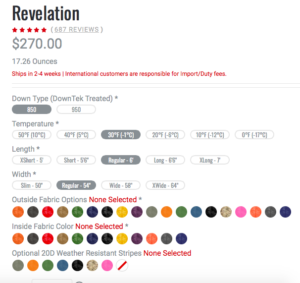
Enlightened Equipment has down and synthetic versions, with about $100 price difference. I like the freedom to choose your own interior and exterior colors, length, width, and temperature rating. The custom choices require 2-4 weeks lead time.
Thermarest Neo XTherm
You’ll probably want a sleep mat, too. You may not need it for warmth insulation, but it’ll make the rocky ground more sleepable. TPU veteran Cheryl Tulkoff uses a Therm A Rest Neo Air Xtherm which will run you about $150. It weighs just less than a pound and is constructed with over 100 cells, which works well on the rocky terrain that is a feature of Big Bend. The Therm A Rest XLite at $130 weighs a half-pound less, but there may a reason for the link to the video “How to Fix a Leaky Sleeping Pad” on the Amazon page. TPU veteran Eric Chan found that the valve on his XLite leaked over time.
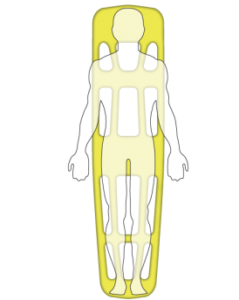
The Klymit Static V is a full-size mat that weighs only 18 oz, costs $55 and is constructed of rugged material that isn’t afraid of rough terrain. Klymit’s Inertia X-Frame takes out bulk and leaves padding only at pressure points (head, shoulders, hips). Pared down to a skeleton, it weighs only 6 oz., stuffs down to the size of a soda can and costs $60 on Amazon.
Klymit Inertia X-Frame
For 3 more ounces and about the same price, you can get the full-length Inertia X-Frame.
There are ever so many more choices; I’m only scratching the surface for simplicity’s sake. You get the idea: the more you’re willing to pay, the lighter you can go.
Check out your local mountain store, countless outdoor websites or your nearest REI retailer.
If the many choices have you bewildered, contact the Race Director, Chris Herrera. If he doesn’t have the answer, he can steer you to someone who does. Reach him at [email protected] or 432.294.5284.




 Meet Jess Kolko